Personal builds · 2026
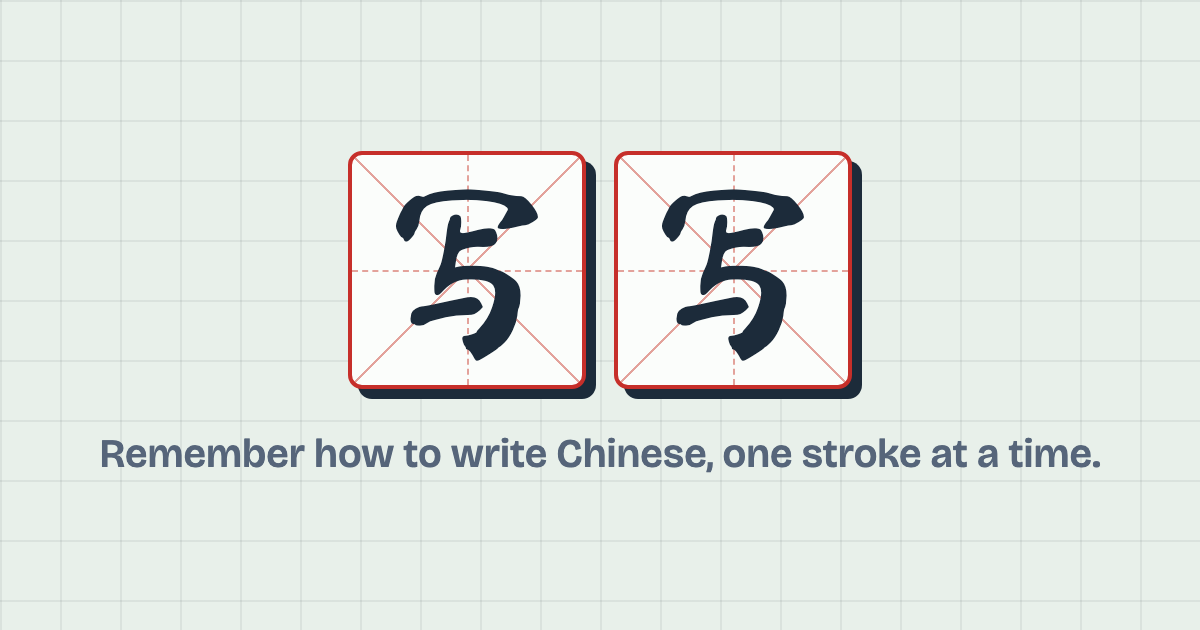
写写 Xiě Xiě
A place to practise Chinese handwriting, starting again with characters I learnt in school.
active
Why it existed
Writing Chinese has always been difficult for me, even though I did relatively well in Chinese exams at school. I can speak it, but reading takes more effort, and writing is where I really struggle.
For context, my parents are from China, and I have a very Chinese-sounding, two-word full name: "Lin Jin". So naturally, people kinda expect my Chinese to be stellar (which it isn't). Peer pressure aside (haha), I do find myself wanting to better at writing Chinese, so I built 写写: somewhere to start again, with characters I learnt in primary school.
So, I developed the whole project with Claude Opus 5.5, which helped steer the design, implementation, and testing throughout. I supplied the direction and feedback from people trying it.
What was built
写写 lets you practise handwriting in the browser. Its stroke-by-stroke mode uses the excellent Hanzi Writer to guide you through a character and check each stroke. This is useful when learning how to write a character, including its stroke order.
You can start at a familiar level. P1 to P6 follow the MOE 欢乐伙伴 character lists. The secondary levels cover the remaining characters in China's list of 3,500 everyday characters, grouped by frequency rather than an MOE secondary syllabus. A business level adds words used at work.
You can start without an account, with progress saved in your browser, or sign in with Google to carry it across devices.
Making room for natural handwriting
After a couple of rounds of guerrilla user testing, I realised many people wanted to write the word quickly. They were less concerned with stroke order. Checking one stroke at a time got in the way of how they wanted to practise.
That led to relaxed mode, which checks the character as a whole and allows strokes in any order or direction, including joined strokes. It needed a new handwriting detection engine.
Claude Opus 5.5 wrote the custom engine and used handwriting samples I supplied to generate many simulated strokes for testing. We used those variations to tune how forgiving the checker should be: accepting imperfect handwriting and joined strokes, while still rejecting characters that were too far off.
For handwriting the local engine rejects, I added Google's handwriting recogniser as an optional second opinion. It uses the unofficial endpoint behind Google Translate and Input Tools. I do not know how long that endpoint will stay available; if it stops responding, practice continues with the local checker.
If your Chinese handwriting is a little rusty too, give 写写 a try. We can practise together.